Chadda, S. (2009). Devils' Kiss. New York: Hyperion Books.
327 pages.
Appetizer: Billi is in training and is being tested to join the Knights Templar. Her father, who is the leader of the secret religious society, has been training her since she was little to be the first female knight. Billi never really got a choice in the matter.
At school, Billi is friendless, dateless and has trouble completing all of her assignments due to her training. She regularly has to try to explain away her many bruises and cuts, results from training and battles with werewolves, vampires, ghouls and devils.
But all of that is about to change since her old best friend, Kay, has returned from his own special training as an Oracle in Jerusalem. They can't pick up their friendship left off though. Kay seems different and Billi is jealous of the fact that he got to escape for a while. To make matters worse, Billi's father, Arthur, is willing to praise Kay and not her.
Now that a fallen angel is threatening to enact the tenth plague and kill all the first born children in London, Billi is going to have to decide what is truly important to her.
I enjoyed Devil's Kiss. The fight scenes had a bit of a Buffy-butt-kicking feel to them. I liked Billi as a character, enough that I will probably pick up the sequel, Dark Goddess, pretty soon. But I have to say, I wasn't *in love* with the book. While it's quickly established that Billi is very angsty when it comes to both her dad and Kay, it took me a long time to understand why she felt the way she did. I felt like in the case of her friendship with Kay, I didn't really get what was going on between them until about page 250-ish. And by then, I couldn't really be bothered to care for him any more.
As for Billi and her father...well, she has some serious Daddy issues. Ever since his wife's death, Arthur has been cold and distant with his daughter. No praise. No "I love you's" and he makes it clear, if it comes down to saving others or saving her, he'd choose to save others. As with Kay, I had trouble knowing who Billi's father was. Eventually, his motives were revealed, and that was satisfying.
The one thing I could seem to get a sense of was the way Devil's Kiss played with religious lore. I liked the survival of the Knights Templar into the present-day. I liked the threat of the plague that paralleled the Biblical plague in Egypt. I thought this was a refreshing twist to presenting creatures like vampires and werewolves within a larger tradition.
Dinner Conversation:
"Killing him should be easy; he's only six.
Then why the bilious, twisting feeling deep in her guts?
Why the cold, clammy dampness down her back?
He's only six.
Billi waded through the spiny grass toward the back of the park. The autumnal night wind whispered to her, down here in The Pit.
What a name for a playground." (p. 3)
"The Order had been formed to defend the Holy Land, but that battle had been lost long ago. Their war wasn't for Jerusalem, not anymore, but for mankind's soul. Their war was against the supernatural evil that preyed on humanity. A war they called The Dark Conflict.
The Bataille Tenebreuse.
Their endless, unwinnable war.
Billi watched the party head back up to Fleet Street and their waiting bus, all safe in their cocoons of ignorance, unaware of the shadow war being fought around them." (pp. 30-31)
"She'd been excited at first, being part of something big, mystical, the stuff of legend. Being part of the Knights Templar and their secret war against the enemies of mankind. The unholy.
The beast within: mortals with the heart of the wild.
The hungry dead: corpse-eaters and blood-drinkers.
The ghosts: spirits of pain.
The devils: tempters of humanity.
And the Grigori: dark angels. (pp. 32-33)
Tasty Rating: !!!
Thursday, February 24, 2011
Wednesday, February 16, 2011
Literary Feast Discussion: Ship Breaker (The End!)
Welcome back, Ship Breakers!
Our thoughts on the ending of this Printz winner are below. Beware the spoilers! Monica and I would love to know what you thought of the ending and of Ship Breaker in general in the comments below. So, don't be shy, let us know your thoughts.
Shel: I've decided I will have to start calling people "piratical
bastards." Although, I may go with "piratical punks" just to dull the
insult a little.
Monica: Pshaw. Use it the way it's meant to be! You can't soften up an
insult! Of course, pirates are kind of in right now. your intended target
might not even mind. ;)
Shel: So, overall, what did you think of Ship Breaker?
Monica: Three out of five stars. Middle ground. The writing was sound,
but I didn't care too much about either of the main characters. I was more
interested in the minor players, like the captain, or what's-her-face's
mom. I'm halfway through Windup Girl, also by Paolo Bacigalupi,
and honestly, I'm enjoying that one more. Maybe Ship Breaker was
just too short for him to really delve into the plot and the characters?
Shel: For me, I really like the world Bacigalupi created. The story is so
relevant. And while there are aspects of both Nailer and Lucky Girl that I
liked, neither of them really captured me in the end. I think I would have
liked to see other characters stories within this world.
Monica: I want more Tool. Is it bad, that he was the one I was most
intrigued with? I would happily read a book that explained where
he came from.
Shel: Well with Tool, Bacigalupi created this wonderful character who was
the constant outsider and we only got the surface level of why he was so
different. There was definitely more to learn about Tool.
Monica: Spin-off novel? Spin-off novel.
Monica: I'd buy that book for sure.
And that ends our feast on Ship Breaker! What did you think of it?
We might be holding off on our next feast for a couple of weeks. Both Monica and I seem to be a bit busy with pesky homeworks. But never fear, we'll be back soon-ish. Start thinking about which book you would like to read next.
Monday, February 14, 2011
Literary Feast Discussion: Ship Breaker (Chapter 18-21)
Wow, so Ship Breaker is speeding up! Let's skip the intro jibber-jabber and get straight to the comments because I need to finish this book and finish it soon....
Shel: So, normally I'd be all "YAY KISS!" but for some reason when Nailer and Nita kiss, I wasn't that happy for them. The moment felt forced to me. I think it has to do with the fact that several weeks went by and I feel like I've somehow missed some character development. Am I alone in this?
Monica: Nope. They’re just not that convincing as a couple. I think it’s more that the author didn’t have any other options. They’re thrown together and they’re the only two people even sort of suited for each other because no one else is around and they can’t very well have Nailer making out with Tool. But I don’t even like Nita, so I’m not about to encourage this relationship.
Shel: See, I liked her at first. But she's kind of losing me. I was so excited that there was finally a potential escape. I had visions of a fast moving ship and everything. I can't believe Nita was captured while Nailer was out. I guess I'll just be thankful that Tool is okay. After all, he is winning the favorite character fight even more now.
Monica: Nita is useless! She’s like Princess Peach – she stands there getting into trouble and going, “Oh no!” while poor Nailer has to run around fighting all the bad guys for her. (Poor Nita. She really doesn’t stand a chance with me.)
Shel: See, she seemed clever at first. Then manipulate. And now she's just kind of a prop. And then Tool left. Fail.
Monica: EPIC FAIL. And it doesn’t even look like he’s coming back. Why!? Why can’t the dramatic action shift?! I’d happily follow Tool anywhere! Backstory away!!
Shel: What do you think of all this killing business and of Nailer being "blood-thirsty"?
Monica: Eh? I think he’s as “blood thirsty” as any other kid raised on shipwrecks, doing work from the time he was old enough to understand, with an abusive father and perhaps a somewhat underdeveloped moral compass. I probably wouldn’t be doing much better, really, except for the way I’d be dead already due to lack of street smarts and fear of non-prepackaged food.
Shel: Yeah, I think I would have been a goner too. Unless I'd been born a swank. And never left my swank neighborhood. In other news...Yay! Nailer is learning to read. I approve.
Monica: What he needs is a modified version of Dick and Jane that fits his worldview. “See Dick strip wire. Strip wire, Dick, strip wire!”
Shel: See Jane mutilate herself to keep the rapists away! Mutilate, Jane. Mutilate! Quality.
So, what do you think of Ship Breaker? Feel free to leave your comments below. We'll be finishing up the book for Wednesday (I promise!). So, I'll see you back here soon.
Labels:
Award,
Dystopia,
Printz Award,
Science Fiction,
Young Adult
Saturday, February 5, 2011
Literary Feast Discussion: Ship Breaker (Chapters 13 through 17)
Hello again, few but dear readers. How goes life? Monica and I are still making our way through Paolo Bacigalupi's Ship Breaker. Our thoughts about chapters 13-17 are below. We'd love to hear what you think of the book in the comments, few but dear readers.
Shel: After taking a few days off and picking up this book once more, I can't believe some of the characters' names. It makes me wonder what my name would be if I lived in the Ship Breaker world. I imagine I would be something like "Whiney Girl," since I'd constantly complain about the working conditions and lack of sanitation. How about you?
Monica: Oh, I’d be Stumbles, for sure. Because—and trust me on this—if I had to do be doing any of the running / wire cutting / fighting that these kids are doing on a daily basis, I’d be black and blue and blistered and crippled. Clumsy is my middle name.
Whiney Girl: I like that Tool turns out to be a good guy. Yay, Tool!
Monica: His name is strange but we love him!!! I wonder if we’re ever going to find out his whole back story… To be honest, he might be my favorite character of the whole book.
Shel: See, at first, I was willing to cheer on Lucky Girl, but she is proving to be a little too manipulative for my tastes. I do like Tool. But just as Lucky Girl is too manipulative, he seems a little too wise.
Shel: I like the tension over how similar Nailer is to his father.
Monica: And how desperate Nailer is for it to not be true. Poor Nailer. If my daddy was a crazy drunken killer-type person, I’d have disowned him by now. But family loyalty wins out, I guess, at least for now.
Shel: And I quote: "It's human nature to tear one another apart. Be glad you come from such a successful line of killers" (p. 175). Yikies.
Monica: Upside, he’s ahead in the game! Look how much more trouble he would have had if he *didn’t* have such a fierce attitude! (Trying desperately to look on the bright side…?)
Shel: The bright side is fun! While I'm enjoying this book, I did feel like the first two part were a little too heavy on the lets sit around and talk. It's nice to have some more action now.
Monica: Yeeees. I liked the finger-cutting moment, but other than that, there was a LOT of exposition. But now, there’s fighting in the streets! Running for their lives! Hooray!! J (I’m a little bloodthirsty. I can’t help it.)
Shel: Never fear, I thirst for blood too...in the only way that a vegetarian can thirst for blood.
Monica: Nailer is right. Nita *is* kind of a cold one. Way to hang Tool out to dry, girl – I like him way more than you, so I’m kind of bothered by your Cringe In The Shadows attitude. … On the upside, yay Nailer! Way to be loyal!
What are your thoughts, cool cats? Monica and I would love to read your opinions of Ship Breaker. We'll be back with comments on chapters 18 through 21 by Saturday-ish. The feast continues then!
Labels:
2010s,
Award,
Dystopia,
Literary Feast,
Printz Award,
Young Adult
Friday, February 4, 2011
In other news, I'm afraid of hair...and my blanket.
I'm long over due for a personal post. So here's a rumination that came to me a few nights ago while I was trying to sleep. It was late at night. When all logic has left me. Obviously.
Around fourth or fifth grade, I started to realize that I was unnerved by hair. Irrationally, cringe-worthy unnerved by loose human hairs. I am fine with it as long as it remained attached to someone's head.
Discovering someone else's long hair, whether on a desk, a hotel pillow, or in my cafeteria meal disturbs me beyond all reason. Whenever I find myself in one of these circumstances, I get the chills and the urge to throw up shakes my frame.
In high school, one of my close friends had waist-length hair. I didn't want to invite her over to my house, fearing after she left I would find one of her hairs in my room, more snakes than hair.
For the most part, this irrational fear isn't actually that bad. Chances are good that if you met me on the street, I'd seem perfectly normal-ish.
But my fear has reared it's ugly, shedding, shaggy head and tousled its hair all over my life within the past few weeks.
Several years ago, I bought a beautiful, hand-made quilt on a trip to India. While I loved it's colors, I'd never really used it on my own bed. The first night after I bought it I discovered the drawback of a hand-made quilt: a stranger's hair was sewn into the patchwork. *Chills*
The quilter had long, loooooong, looooooOOOOOOOOooooooong hair. If I were to sleep with the quilt, I would feel the stranger's hair touch my arm or leg. *quivers*
So I set the blanket aside as a decoration.
But now, NOW, NOW! It's ridiculously cold outside. I needed another blanket for my bed. So, I added the quilt back to my bed.
Within the last two weeks, I've pulled three of the stranger's (or even worse many strangers') hair from my blanket. I cannot express how much this upsets me. Not only am I encountering a stranger's hair, but I am finding them in my bed. *nervous breakdown*
I may be unnerved enough to pay to keep my house at 75 degrees every night, just so I'll be able to justify folding and storing the quilt far away from me and my bed.
Tuesday, February 1, 2011
REVIEW: The Sisters Grimm Book One: The Fairy-Tale Detectives Funsies! Like Percy Jackson. But with fairy tale characters instead of Greek gods.
Hello, few but dear readers! I'm sorry for the lack of posts recently. I keep going through phases were I do incredible amounts of work on my dissertation, then I slack in front of the TV for two days. AND NO READING GETS DONE IN EITHER PHASE. Maybe I'll improve. Maybe I won't. We'll see.
Any-hoo, Review!
Buckley, M. (2007). The Sisters Grimm: The Fairy-Tale Detectives. New York: Amulet Books.
284 pages.
Appetizer: Ever since their parents mysteriously disappeared, eleven-year-old Sabrina and seven-year-old Daphne have bounced from horrible foster home to horrible foster home. But now, a woman is claiming to be their grandmother and has requested the sisters come to her home in Ferryport Landing, New York. While Daphne is excited, Sabrina has her doubts. Mostly because her father had always said the girls' grandmother was dead.
Soon after the girls arrive, they learn that their Granny Relda Grimm isn't like most other grandmas and the town isn't like most oth...you get the idea. Ferryport Landing is home to all the creatures and characters of fairy tales that you can think of. Wilhelm Grimm (of The Brothers Grimm) brought them to America. All of the fairy tale creatures have been cursed to remain within the town. As long as a Grimm family member is alive and living in the town, the creatures are stuck in town too. The only way to bring down the barrier is to get rid of the Grimms and the longer Sabrina and Daphne stay in town, the more they realize a lot of the fairy tale characters would like to be free. And to make matters worse, it would seem a giant is on the loose and has taken Granny Relda before the girls can really get to know her.
This series really is the fairy tale equivalent of the Percy Jackson series which includes the gods of Greek myth. The Fairy-Tale Detectives is action-packed and fun. But having said that, I had trouble getting into it. I really liked Sabrina's emotional characterization as she resists getting to know her grandmother, but still longs for a family and deals with being responsible for her litter sister. It took be almost the entire book to figure out what my problem was. A lot of the action seemed too rushed. I didn't really feel any tension or threat. Even with my problem getting into the story, I'll probably go on to read more of the series at some point. (There are some subtle implications about nationalism and America and the series is just *asking* to be compared to rick Riordan's Percy Jackson series. I can't help myself.)
I actually decided to assign this novel to my undergrads. My students seemed to really enjoy it. Some found it to be completely fast-paced, which puts my complaints down the drain. What do I know, huh? They also thought it would be a good movie and several wanted to continue with the series. Most of my students thought it might be hard to get male readers to engage with the series (even though it seems the Puck character, introduced mid-book, is there just for that purpose). But I was excited when one of my students, who seems like a bit of a reluctant reader, asked to borrow the first book in Buckley's other series, NERDS, which seems more boy-welcoming.
For the week's readings, I decided to include it with several different versions of The Three Little Pigs:

The contrasts were a lot of fun.
Dinner Conversation:
"I'm going to die of boredom here, Sabrina Grimm thought as she looked out the train window at Ferryport Landing, New York.
The little town in the distance seemed to be mostly hills and trees next tot he cold, gray Hudson River. A few two- and three-story brownstone buildings huddled around what appeared to be the town's only street. Beyond it were endless acres of evergreen forest. Sabrina could see no movie theaters, malls, or museums, and felt using the word town to describe Ferryport Landing was a bit of a stretch." (p. 1)
"Sabrina was sure it was Ms. Smirt's personal mission to get the girls out of the orphanage and into a foster home. So far she had failed miserably. She'd sent them to live with people who were usually mean and occasionally crazy, and who had used them as maids, house sitters, or just plain ignored them. But this time Ms. Smirt was sending them to live with a dead woman.
"I hope you don't bother your grandmother with all these ridiculous questions!" Ms. Smirt said curtly, which was how she said most things to Sabrina and Daphne. "She is old and cannot handle a lot of trouble."
"She's dead! I've already told you a million times, our grandmother is dead!" said Sabrina." (p. 3).
"And, with a couple of exceptions, things have been pretty peaceful in Ferryport Landing between humans and Everafters. But just a look through Jacob and Wilhelm's book, and the books of Hans Christian Andersen, Andrew Lang, Lewis Carroll, Jonathan Swift, and countless other chronicles of Everafters shows you how fragile the peace is, and the trouble could be right around the corner. So, like Wilhelm, we have the responsibility of keeping this pot from boiling over. We watch the town, investigate anything strange or criminal, and document what we see, so that when we are gone our children will know what we went through. Think of us as detectives." (pp. 69-70)
"Daphne, that mosnter was real. We can't fight that by ourselves. Even if we knew where he carried them off to, I don't think we could get them back. What are a seven-year0old and an eleven-year-old going to do about a giant?"
"You're almost twelve," Daphne said, wiping her eyes on the sleeve of her fuzzy orange shirt. "Besides, you heard Granny Relda. We're Grimms and this is what Grimms do. We take care of fairy-tale problems. We'll find a way to save Granny and Mr. Canis." (pp. 106-107)
Tasty Rating: !!!
Friday, January 28, 2011
Literary Feast Discussion: Ship Breaker (Chapters Seven to Twelve)
Well friends, the eagle-eyed among you will note that it is several days past when we planned on posting. Our illustrious leader, Shel, has been going quietly insane in the confines of her condo (ooh, alliteration!) whilst she struggles to complete her education by... May? Are you trying to finish by May, sweetie? I personally have no excuse whatsoever save for the fact that Library School is kicking my butt -- who on earth decided that statistics were necessary for doing research!?But anyway. I digress.
On to Ship Breaker! Have you been enjoying it so far, few but dear readers? Is it everything you would hope for and more, in a Printz winner?
Shel: What do you think of Lucky Strike? Good guy or villain? Somewhere in between?
Monica: Somewhere in between, for sure. I don't think he's being painted as a villain, necessarily, but he's definitely scheme-y enough to not be good. Which, honestly, is probably more authentic. Just because you suddenly become wealthy doesn't mean you turn evil... but neither does it mean you are all philanthropic, either. He's obviously keeping what's his, and trying to add to it.
Shel: I love how Pima is so dismissive of the new new clothes on the wreckage of the ship. So practical.
Monica: But she does like the pretties, give the girl some credit.
Shel: I also think Pima's reaction to the realization that the supposed dead girl is not so dead: "That's some creepy shit," she said (p. 95). Yes, I agree. But imagine how creepy it is for the supposed dead girl, waking up to two people trying to cut off your fingers and discussing your state as a dead person.
Monica: Um, yes? Yes. The part where they were hauling on her hand and trying to just wiggle the rings off was gross enough. When they actually decided to just hack off her fingers, I felt vaguely like throwing up.....
Shel: I really like that Dead Girl/Lucky Girl/Whatever her real name will be... Nita has some real skills. She's not just some helpless damsel. I'm pretty serious now about wanting her perspective of this story. You hear that, Bacigalupi? Fan fiction writers?
Monica: YES! Fanfiction writers will carry her plot, even if the book fails miserably....
Shel: Although, all of this "blood with blood" stuff is just too unhygienic for my liking. There have got to be blood born diseases in this world. Nita TELL THEM!
Monica: I think they're more worried about how they don't have water. ;)
That's it for now, kids! Join us next time (I'm going to throw out Next Saturday as a date, and cross my fingers that we make the deadline) for a discussion of chapters thirteen through nineteen. As always, feel free to toss out your own thoughts in the comment section!
Labels:
2010s,
Award,
Dystopia,
Literary Feast,
Printz Award,
Young Adult
Wednesday, January 19, 2011
REVIEW: Temping Fate I Want a Job at the D.R. Temp Agency! (To be honest, I think I'd make more money there)
Friesner, E. (2006). Temping Fate. New York: Speak.
279 pages.
Appetizer: Ilana Newhouse is desperate for a summer job. But when she first arrive at the D.R. Temp agency, it sets off a few alarms, like, why isn't anyone else working in the building? But it turns out the Divine Relief Temp Agency isn't a typical work place and it may be the perfect place for a teenage with such "attitude."
On her first day of work, Ilana discovers that she and the other temps actually work for the gods of myth (mostly those from Greek mythology) and Ilana has been assigned to work for The Fates, seeing the strings of human lives. Can she handle the pressure of such an unusual job and come to terms with her perfect sister, Dyllin who was a temp before her.
At first I really enjoyed Temping Fate. It's a very fun twist on dealing with the tensions and power issues of being the new employee at a job. There's a lot of fun off the cuff humor and sarcasm and a touch of feminism. All of these things should be a recipe for me to fall irreversibly in love with a book. There's also lots of fun, realistic dialogue (as realistic as can be when characters are dialoguing about their bosses, The Fates or gods of myth).
While I initially liked Ilana's characterization as a bit of a fantasy and sci-fi nerd and how tough and sarcastic she could be, I started to get annoyed with her about one-third of the way into the book. She made a lot of decisions I didn't like. The kind where you want to yell, "Don't go in there, you idiot!!!!!!" But she would do it. Then I would have to spend the next two chapters reading the fall-out of her less than stellar choices. Then I started to get annoyed with the book. What had at first had fun light joking dialogue became a time-waste. I just wanted something to happen! Then, about fifty pages from the end of the novel, BAM! there was a threat to the world as the characters know it. And I was left wishing that the plot and threats had made themselves obvious just a liiiiiiiiittle sooner.
Overall, despite some moments of frustration, I did enjoy Temping Fate. It was a fun approach to presenting myth in the modern world. I'm not ashamed to admit that I would love to work at that temp agency. I think I'd work harder than Ilana did. Jut tell me where to send my resume!
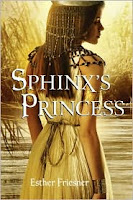
Also, when I first picked up this book, I drove myself crazy trying to figure out where I knew Esther Friesner's name from. Well, not too crazy. But crazy enough that I did have to figure out what else she had written. Friesner has published numerous feminist retellings of ancient myth and history in her Nobody's Princess and Sphinx series. They've been on my to-read lists for a while. It's good not to be crazy.
(No matter the time, one thing is clear, these rebellious ladies will give you the cold shoulder.)
And apparently she's also authored a Star Trek: Deep Space Nine novel. Ahahaha! Amused!
Dinner Conversation:
"Ilana Newhouse checked the business card in her hand one more time, then looked at the gleaming office door in front of her. The letters on the frosted-glass panel--big, black, outlined with gold--left no room for doubt. This was the place.
D.R. TEMPS, INCORPORATED
R. ATATOSK, MGR.
Ilana glanced at her wristwatch: 10:45 A.M. Her appointment was at eleven o'clock. She nibbled her lower lip and sighed. Dad said it was good to arrive early for a job interview. It showed your prospective employer that you were a willing worker, eager to be hired, eager to please.
Willing? Eager? More like last-ditch, all-other-bridges-burned desperate. So pathetically desperate to get this summer job that she wondered if maybe she should have shown up for this eleven o'clock even earlier. Like, oh, say, nine o'clock. Yesterday." (pp. 3-4).
"We're not so different from you mortals, you know," Tabby [one of the fates] told Ilana. "When you get tired on the job, you get careless and make all sorts of little mistakes."
"What's a 'little' mistake for you three? The Black Death?" Ilana asked. "I'm not going to pretend I understand everything that's going on here. I don't know why three of the most powerful beings in the universe chose a flyspeck town like Porlock's Landing to set up shop, and I don't care. All I wanted was a summer job. I got this one, and Mrs. Atatosk gave me my pay in advance, so I promise I'm going to earn it." (p. 42)
"Well, well, I see someone's got an attitude problem." The spider tried to stay angry, but its scowl twisted into a smirk. "Get you mad enough and you forget about everything else. Attitude like that, maybe it'll help you do this job. On the other leg, it could blow up in your face." (p.47)
Tasty Rating: !!!
Sunday, January 16, 2011
Yes, Yes, I know, I'm Being Crazy...Another Challenge Accepted: 2011 Bloody Jack Challenge! Arr!
So, Few But Dear Readers, I can hear your voice. You're saying something to the effect of:
Shel, what the frak are you thinking?! Accepting another challenge?! Have you even started reading for the 2011 historical fiction challenge? And what about the debut author challenge? AND the Wish I'd Read That challenge? And WHAT ABOUT YOUR DISSERTATION?! You need to finish that to and get a *real* job.
While these are all excellent points, Few But Dear Readers, I'll have you know that when you pretend-rant at me like that, you sound even worse than a mother. (All that is missing is the "It's about time you became a productive member of society. Your father and I can't support you forever. We want to retire, you heartless selfish beast!" on the end of that imaginary rant.)
And, imagined or not, I will never listen to or obey the rants of pseudo-internet mothers.

And so, I stick out my tongue at you few but dear readers and would like you to know that I have accepted yet another 2011 reading challenge.
Before you judge me too harshly, know that I have chosen the pansy-a$$ed level for the challenge, better known as the *crow's nest* level in the official challenge announcement over at Bookworming in the 21st Century's site.
To meet the challenge, I will have to read one book from the Bloody Jack series by L.A. Meyer. Yes, that's right, one book.
Powers that be, let's hope that I can manage that much.
I haven't read any of the Bloody Jack series previously. But when I stumbled upon the announcement, I read that the series is about an orphan girl who disguises herself as a boy and signs on to work on a British sailing ship.
I could get into that.
So, with the first book, Bloody Jack: Being an account of the curious adventures of Mary "Jacky" Faber, ship's boy already on it's way to me from Amazon Marketplace, how could I refuse?
(I couldn't!)
Friday, January 14, 2011
REVIEW: Stork
Delsol, W. (2010). Stork. Somerville, MA: Candlewick Press.
357 pages.
Appetizer: Sixteen-year-old Kat is still the new girl at Norse Falls High School in Minnesota. The fashion savvy girl moved there with her mom over the summer, after her mom's divorce and to help her grandfather with his store. Kat is still far from excited about her new town, especially after she had a drunken make-out session with the king of school, Wade, only to discover the next day that he has a girlfriend. She loves the thought of downtown Norse Falls being torn down to make room for a Starbucks, which angers this boy Jack, who seems to have a special dislike for Kat.
But the way Kat sees her new home could change after a strange meeting with a secret organization of older ladies. The group of women are Storks. They have dreams of babies who are yet to be born and must decide which potential women will raise the children.
As Kat must decide the fate of the baby girl she keeps dreaming of, she also must deal with the fact that maybe Jack doesn't hate her and maybe they have a strange childhood connection. Do they have a future too? That may depend, because Kat keeps finding herself in life threatening situations.
Few But Dear Readers, I heart Stork...at first. Kat's voice was wonderful. She has a great way of describing her situations with wonderful pop culture and folklore similes and metaphors. One of my favorites was when Kat describes the old stork ladies (my term for them) meeting as a "Knights of the Round Table meets Golden Girls Reunion" (p. 8). She had a wonderful way of saying this, which, I'll admit, didn't always feel like they were coming from a sixteen-year-old girl, but were still incredibly funny. Another one of my favorite comments appeared when Kat is invited to go hiking:
Oooh, and then there's, "When things get bad, the bad go to bed." (p. 191). I like that. I may have to repeat that to myself whenever I go to take naps. Which is often.
Another aspect of the book that I absolutely loved was the tension between tradition and innovation and the choices to cling to the past or to flow with change. Most of the characters and much of the magical dimension of the story is infused with Icelandic ancestry and Norse mythology. Norse Falls is a small older town and a developer wants to level the downtown. Also, there's debate about combining the high school with another town's and deciding with building to use. I loved the way the author, Wendy Delsol, dealt with this tension and I'm currently finding a way that I can work it into my dissertation.
While the book had a lot of great lines and tensions and I'll probably pick up the sequel Frost when it come out in September, as hinted at earlier, there were some aspects I was less fond of. About midway through the book, I started to have problems with some aspects of the plot...
*Spoilers for the middle of the book will follow!*
When things start to go well for Jack and Kat romantically, it seemed like Kat's emotions shifted too quickly to being crazy about him. I didn't get why she liked him so much. Thus far, he'd refused to talk to her, except to ask her to a dance, and then was late to their first pseudo-date. Plus, they're only happy for one day (which I actually find incredibly believable. When I was in high school, I had a relationship that lasted one week. So, this bit of drama rang true for me personally.) I took issue with the pot hole in the relationship road...the wind that sent them off course...the spot where the Kat-Jack train derailed. Wade reveals his drunken night with Kat to Jack. I was less than excited by Jack's reaction to the news:
First off, the book hadn't previously hinted that Kat had been date-raped. She didn't seem particularly worried about that in her narration. She just seemed more embarrassed and ashamed for not realizing Wade was a jerk sooner. And the real problem here is that Jack is blaming her. How exactly could Kat realize she was putting herself in danger? Wade had been the first person to be nice to her since she'd moved to town weeks before. While I certainly don't support the fact that Kat got drunk with a strange boy, I absolutely hate Jack's reaction. If a guy reacts to a revelation that his girlfriend may have been raped the way he does, I totally think that guy should be dumped immediately. Alas, that's not what happens in Stork. Kat instead agrees that she was wrong and Jack storms off.
Jerk.
I do not approve. I do not approve at all. Aaaaaaand, what went from originally being a book I loved and was planning to give five stars, I now have to judge harshly.
Eventually, when Kat finally sees Jack again several days later, he does apologize for his reaction:
Dear Boytoy-Jack, perhaps when you learn that your new girlfriend was manipulated and possibly sexually assaulted by your former best friend and current enemy you should consider asking her how she is instead of hinting at blaming her, and then going off for several days to deal with your own issues. And maybe, just maybe, you should have gotten over your phone issues to give her a call.
Just saying.
Dinner Conversation:
"One moment I was fine, and the next it felt like an army of fire ants was marching across my head. Seriously. Fire ants wearing combat boots--heavy, cleated combat boots. I'd never experienced anything like it. I scratched at my scalp until my hand cramped. It didn't help. I turned, and the mirror behind the cash register confirmed my suspicions: along with the crazy rash creeping from under my hairline, I also had claw marks. Any other head or hair would conceal such blemishes. Not mine. My towheaded, sun-fearing ancestors had seen to that" (p. 1).
"All of a sudden, something Hulda had said previously clicked. "Did you say Storkur Society?" As in stork?" I asked. "As in big white bird? As in baby delivery service?"
Hulda nodded. "Yes. Aslendigas Storkur Society. Icelandic Stork Society, Local 414."
"You guys are joking, right?" I said. "This is some kind of prank. Am I being punked by someone?" My friends in California were capable, but no way they'd go to this kind of trouble. And I didn't have friends here in Minnesota." (p. 17).
"You will be contacted."
"By?"
"By the essence awaiting birth."
"Could you be a little more specific? Contacted how? Phone? Text? FedEx?"
"The child always comes as a dream."
I rubbed my cheeks. "I've pretty much convinced myself that you are a sickness-induced dream. So that would be a dream within a dream." (p. 53)
"The Asking Fire, I remembered with a jolt. "There's something I need to tell you, Penny. Two things, actually. Your paper, it flew out of the fire. You had already walked away, so I picked it up and put it back in for you."
"What?" Penny looked startled.
"There's more," I said. "Jack asked me to the dance, and I kind of said yes. I don't know what I was thinking."
"You fed my paper to the fire?" Penny asked.
"Well, yeah, but..."
"So, then the dire thought you asked for him."
"It was your writing."
"How would the fire know that?" Penny asked.
I couldn't believe I was having this conversation. (pp. 122-123).
Tasty Rating: !!!
357 pages.
Appetizer: Sixteen-year-old Kat is still the new girl at Norse Falls High School in Minnesota. The fashion savvy girl moved there with her mom over the summer, after her mom's divorce and to help her grandfather with his store. Kat is still far from excited about her new town, especially after she had a drunken make-out session with the king of school, Wade, only to discover the next day that he has a girlfriend. She loves the thought of downtown Norse Falls being torn down to make room for a Starbucks, which angers this boy Jack, who seems to have a special dislike for Kat.
But the way Kat sees her new home could change after a strange meeting with a secret organization of older ladies. The group of women are Storks. They have dreams of babies who are yet to be born and must decide which potential women will raise the children.
As Kat must decide the fate of the baby girl she keeps dreaming of, she also must deal with the fact that maybe Jack doesn't hate her and maybe they have a strange childhood connection. Do they have a future too? That may depend, because Kat keeps finding herself in life threatening situations.
Few But Dear Readers, I heart Stork...at first. Kat's voice was wonderful. She has a great way of describing her situations with wonderful pop culture and folklore similes and metaphors. One of my favorites was when Kat describes the old stork ladies (my term for them) meeting as a "Knights of the Round Table meets Golden Girls Reunion" (p. 8). She had a wonderful way of saying this, which, I'll admit, didn't always feel like they were coming from a sixteen-year-old girl, but were still incredibly funny. Another one of my favorite comments appeared when Kat is invited to go hiking:
"It's a hiking trail about an hour north of here," Pedro answered. "It's a little punishing, but worth the climb."
Punishing meant painful, and climb meant up, neither of which sounded good to me. (p. 127)
Oooh, and then there's, "When things get bad, the bad go to bed." (p. 191). I like that. I may have to repeat that to myself whenever I go to take naps. Which is often.
Another aspect of the book that I absolutely loved was the tension between tradition and innovation and the choices to cling to the past or to flow with change. Most of the characters and much of the magical dimension of the story is infused with Icelandic ancestry and Norse mythology. Norse Falls is a small older town and a developer wants to level the downtown. Also, there's debate about combining the high school with another town's and deciding with building to use. I loved the way the author, Wendy Delsol, dealt with this tension and I'm currently finding a way that I can work it into my dissertation.
While the book had a lot of great lines and tensions and I'll probably pick up the sequel Frost when it come out in September, as hinted at earlier, there were some aspects I was less fond of. About midway through the book, I started to have problems with some aspects of the plot...
*Spoilers for the middle of the book will follow!*
When things start to go well for Jack and Kat romantically, it seemed like Kat's emotions shifted too quickly to being crazy about him. I didn't get why she liked him so much. Thus far, he'd refused to talk to her, except to ask her to a dance, and then was late to their first pseudo-date. Plus, they're only happy for one day (which I actually find incredibly believable. When I was in high school, I had a relationship that lasted one week. So, this bit of drama rang true for me personally.) I took issue with the pot hole in the relationship road...the wind that sent them off course...the spot where the Kat-Jack train derailed. Wade reveals his drunken night with Kat to Jack. I was less than excited by Jack's reaction to the news:
"What happened?" he asked, his voice tense.
I looked at my shoes. "He took me out to the quarry. We drank beer." I paused, not wanting to own up to my behavior, not to Jack, anyway. "And some hard alcohol. There's a portion of the evening I don't remember."
Jack jumped up as if hit. For the tiniest moment, he frightened me. The rain was pelting us now. I could hear it drumming over the cars and rooftops. I saw every taut muscle in his jaw, neck, and shoulders ripple through his T-shirt, now drenched with rain. This had to be anger. What else would set him off like that?
"He's been accused by girls before. Why would you put yourself in such a dangerous position? You barely knew him."
"It was stupid. I know," I said. There really was no good way to defend my behavior. I'd gone willingly with a creep like Wade. And being duped by a bullish charm was no excuse for recklessness. I worried Jack would think I was that kind of girl. (p. 189)
First off, the book hadn't previously hinted that Kat had been date-raped. She didn't seem particularly worried about that in her narration. She just seemed more embarrassed and ashamed for not realizing Wade was a jerk sooner. And the real problem here is that Jack is blaming her. How exactly could Kat realize she was putting herself in danger? Wade had been the first person to be nice to her since she'd moved to town weeks before. While I certainly don't support the fact that Kat got drunk with a strange boy, I absolutely hate Jack's reaction. If a guy reacts to a revelation that his girlfriend may have been raped the way he does, I totally think that guy should be dumped immediately. Alas, that's not what happens in Stork. Kat instead agrees that she was wrong and Jack storms off.
Jerk.
I do not approve. I do not approve at all. Aaaaaaand, what went from originally being a book I loved and was planning to give five stars, I now have to judge harshly.
Eventually, when Kat finally sees Jack again several days later, he does apologize for his reaction:
"...And I just couldn't stand the thought of him touching you, hurting you. I lost it. I'm sorry, but I did. I snapped."
"I thought you were mad at me. For lying."
He spun wildly to face me. "Mad at you? No. I was mad at him, and myself, but not you."
"But you just took off. You could have called or something."
"He placed a hand over mine and traced light circles with his thumb. "I was in a bad place. I needed to sort some things out. Besides, I'm not really a phone guy." (p. 256).
Dear Boytoy-Jack, perhaps when you learn that your new girlfriend was manipulated and possibly sexually assaulted by your former best friend and current enemy you should consider asking her how she is instead of hinting at blaming her, and then going off for several days to deal with your own issues. And maybe, just maybe, you should have gotten over your phone issues to give her a call.
Just saying.
Dinner Conversation:
"One moment I was fine, and the next it felt like an army of fire ants was marching across my head. Seriously. Fire ants wearing combat boots--heavy, cleated combat boots. I'd never experienced anything like it. I scratched at my scalp until my hand cramped. It didn't help. I turned, and the mirror behind the cash register confirmed my suspicions: along with the crazy rash creeping from under my hairline, I also had claw marks. Any other head or hair would conceal such blemishes. Not mine. My towheaded, sun-fearing ancestors had seen to that" (p. 1).
"All of a sudden, something Hulda had said previously clicked. "Did you say Storkur Society?" As in stork?" I asked. "As in big white bird? As in baby delivery service?"
Hulda nodded. "Yes. Aslendigas Storkur Society. Icelandic Stork Society, Local 414."
"You guys are joking, right?" I said. "This is some kind of prank. Am I being punked by someone?" My friends in California were capable, but no way they'd go to this kind of trouble. And I didn't have friends here in Minnesota." (p. 17).
"You will be contacted."
"By?"
"By the essence awaiting birth."
"Could you be a little more specific? Contacted how? Phone? Text? FedEx?"
"The child always comes as a dream."
I rubbed my cheeks. "I've pretty much convinced myself that you are a sickness-induced dream. So that would be a dream within a dream." (p. 53)
"The Asking Fire, I remembered with a jolt. "There's something I need to tell you, Penny. Two things, actually. Your paper, it flew out of the fire. You had already walked away, so I picked it up and put it back in for you."
"What?" Penny looked startled.
"There's more," I said. "Jack asked me to the dance, and I kind of said yes. I don't know what I was thinking."
"You fed my paper to the fire?" Penny asked.
"Well, yeah, but..."
"So, then the dire thought you asked for him."
"It was your writing."
"How would the fire know that?" Penny asked.
I couldn't believe I was having this conversation. (pp. 122-123).
Tasty Rating: !!!
Tuesday, January 11, 2011
REVIEW: Matilda
Dahl, R. (1988). Matilda. New York: Puffin Books.
240 pages.
Appetizer: Ooh, sweet, sweet enjoyment and childhood memories. I remember absolutely loooving this book when I was a second-third-fourth-no-definitely-second-or-third grade-ish age.
I remember that this book kept me up late, reading into the night and that I fell asleep with my cheek on the page. I felt insanely jealous of Matilda because she was younger than me and a genius. I wanted her ability to move objects with her eyes and would practice, hoping to feel the hands extend from my eyes too.
*Sigh.* Memories....
So, having all these lovey-dovey feelings for this book made it hard to reread as an adult and look at the book critically (but was still a great experience, since I recommend my students do such an exercise if they are interested). Now it turns out, Matilda stands up to the test of time (one of the greatest tests out there). But it was strange, because I still found things to be critical of (like having more of a hint that magical powers were possible earlier in the story...but then, there are already many other aspects of the book that involve suspension of disbelief. Plus, a sudden turn to fantasy is kind of Dahl's thing.) The British vocabulary could throw some young American readers for a loop. I don't remember having a problem with it when I was a kid. But when I discussed the book with some of my undergrads, they said they had trouble with the language difference.
For those of you who missed this novel, five-year-old Matilda doesn't really fit in with the rest of her family. Her father, a used-car salesman, mother, a bingo player, and brother all love to watch TV, and Matilda--who taught herself to read and do math--prefers spending her afternoons in the library, where she has already gone through all of the children's books. When Matilda finally gets to start school, it becomes clear to her wonderful new teacher, the aptly named Miss Honey, that Matilda is special, put the Headmistress, Miss Trunchbull, won't let Matilda learn at her own level. In fact, Miss Trunchbull is unjust toward many of the students. As with her family, Matilda takes it upon herself to get back at those who wrong her and the people she cares about.
Part of what makes Matilda so fun is how horrible the villains of the book are to her. They're so vile toward the seemingly-powerless children, that as young readers (or child-like adults, in my particular case) you immediately empathize with Matilda. I had the same reaction to the Dursleys in the first Harry Potter book. These young protagonists' families are just so mean to them that as a reader I feel so super frustrated by their situations that I'm completely drawn into the story. And so, it's that much more satisfying when the kids gain the upper-hand and take back power from the horrible, evil, vile adults.
I assigned Matilda as the first reading assignment to my undergrads. While I usually go more old school with Grimm tales and Aesop's fables, I thought Matilda opens up the discussion on literacy, love of reading, perception of teachers, feeling powerless, gender in children's literature, etc. My students seemed to like the story (aside from the pesky British spellings). When I turned the discussion to the way gender was presented, they acknowledged that the way femininity was presented wasn't exactly ideal. And while the guys in the class admitted to liking the story, they also admitted that if they were still in grade school, there would have been no way they would have picked up the edition of the book with the pink cover. No way.
Dinner Conversation:
"It's a funny thing about mothers and fathers. Even when their own child is the most disgusting little blister you could ever imagine, they still think that he or she is wonderful.
Some parents go further. They become so blinded by adoration they manage to convince themselves their child has qualities of genius.
Well, there is nothing very wrong with all this. It's the way of the world. It is only when parents begin telling us about the brilliance of their own revolting offspring, that we start shouting, "Bring us a basin! We're going to be sick!" (p. 7).
"It was pleasant to take a hot drink up to her room and have it beside her as she sat in her silent room reading in the empty house in the afternoons. The books transported her into new worlds and introduced her to amazing people who lived exciting lives. She went on olden-day sailing ships with Joseph Conrad. She went to Africa with Ernest Hemingway and to India and Rudyard Kipling. She travelled all over the world while sitting in her little room in an English village." (p. 21)
"She resented being told constantly that she was ignorant and stupid when she knew she wasn't. The anger inside her went on boiling and boiling, and as she lay in bed that night she made a decision. She decided that every time her father or her mother was beastly to her, she would get her own back in some way or another. A small victory or two would help her to tolerate their idiocies and would stop her from going crazy. You might remember that she was still hardly five years old and it is not easy for somebody as small as that to score points against an all-powerful grown-up. Even so, she was determined to have a go. Her father, after what had happened in front of the telly that evening, was first on her list." (p. 29).
"The village school for younger children was a bleak brick building called Crunchem Hall Primary School. It had about two hundred and fifty pupils aged from five to just under twelve years old. The head teacher, the boss, the supreme commander of this establishment was a formidable middle-aged lady whose name was Miss Trunchbull.
Naturally Matilda was put in the bottom class, where there were eighteen other small boys and girls about the same age as her. Their teacher was called Miss Honey, and she could not have been more than twenty-three or twenty-four." (p. 66).
Tasty Rating: !!!!!
Monday, January 10, 2011
Literary Feast Discussion: Ship Breaker (Chapters One through Six)
Okay, so instead of getting this posted on ThursFriday, it's officially going up on Monday. A time that is solidly and squarely three days late....
But that's okay!!!!!! Because Ship Breaker just won the American Library Association's Printz Award, which is for young adult literature. YAAAAAAY! So this timing works out, right? Right.
Comments on the first six chapters are below. We'd love to hear your thoughts as well!
Shel: It's official, I could never be a scavenger like Nailer. I wouldn't say I'm *actually* claustrophobic, but once as a kid I climbed under a huge, low deck in a park for some secret club meeting. I had to wiggle my way out, my back against the deck, my front scratched by wood chips. That day I learned that small spaces are not fun. I was a bit of a slow seven-year-old.
Shel: I like all of the religious elements. I'm curious to see where they lead.
Monica: I'm wondering how far in the future this takes place. Has that been established yet? It would be interesting to see what "old" versions of religions remain in the new... and now long it apparently took to shift over. ;)Shel: I like all of the religious elements. I'm curious to see where they lead.
Shel: Poor Jackson Boy...even if he was a little licebiter, that's a bad way to go. (See above comment and the fact that this book is reminding me of my possible claustrophobia.)
Monica: Best. Ghost story. Ever. Seriously, can you even imagine? "Hear that thumping, tiny child? That's the ghost of JACKSON BOY! He haunts these bulkheads...." Shel: So far, all of the detailed descriptions and analogies are impressing me. But I have to say what *truly* drew me in was the ending of chapter two. Yikes! You?
Monica: Like I mentioned above, I was sold from the opening. He writes like we're actually there... and since I would never, ever ever ever want to BE there, I'm finding it fascinating to read from the warm, clean safety of my living room couch, with a nice glass of clean water next to me.Shel: I like all this talk of luck and fate on page 41. I'm with Pima's mom. The fates have big plans for Nailer. BIG PLANS, I say! (And I don't feel that way just because I read the jacket flap.)
Monica: I hope so -- I don't know if I could take an entire book of Nailer: Copper Scavenger. Or, honestly, Nailer: Abused Child with Terrible, Terrible Father.Shel: With hurricanes and oil spills, this dystopia feels much more immediate than a lot of the other ones out there.
Shel: And now the book was just announced as winning the 2011 Printz!!!!! Victory to Paolo Bagi...Bacigad...Bacigalupi!!!!!!! YAY!
So, now that you know what Monica and I thought of the beginning, we'd love to hear your thoughts. And stay tuned, will be back on Fri-Saturday with comments on chapters 7 through 12. Of course, by Fri-Saturday, I could possibly mean next Tuesday. We'll have to see.
Labels:
2010s,
Award,
Dystopia,
Literary Feast,
Printz Award,
Young Adult
REVIEW: My Life as a Book
Tashjian, J. (2010) My Life as a Book. New York: Christy Ottaviano Books.
211 pages.
Appetizer: Derek's mom, dad and teacher are always trying to force him to read and to make vocabulary lists (although, he prefers to create images using stick-figures to represent the words. These decorate the margins of My Life as a Book.) He is less than excited about this. He's okay with reading, he just likes to read comic books and collections of Calvin and Hobbes (Sidenote--the book is dedicated to Calvin and Hobbes author Bill Watterson, how nice of a touch is that?). Why won't adults just understand that?
When Derek discovers an old newspaper article about the death of a teenage girl on Martha's Vineyard in the attic, he can't help but be curious as to why his parents have kept it. Especially after his mom refuses to talk about it. All Derek wants to do is have an adventure over the summer, but his best friend, Matt, is set to go to Martha's Vineyard to solve the mystery without him. His mom won't stop bugging Derek about reading his assigned books and she even enrolls him for an educational day camp. How can he have an adventure now?
There's a lot of heart to this story, especially as Derek struggles with the way that he is connected to the dead teenage girl. Plus, when he's stuck at an educational day camp with his class know-it-all, Carly, he is forced to get to know her better and discovers that they just might have interests in common and that his parents just might have some good reasons for wanting Derek to excel at school.
My Life as a Book is the kind of middle grade novel that teachers absolutely love. It speaks to the experience of being a reluctant reader and uses a lot of humor. As Derek learns to appreciate literature, he's guided by various people through the process of visualizing stories, engaging with the characters emotionally and predicting what will happen. *Does a dance* Yay for a book helping to teach kids how to engage with a story!!!!!!!
I'm so excited about the literacy dimensions of this book that, even though I talked about visualization with my undergraduates last week, I created a new class discussion so I could bring up the book with them later today.
The doodles in the margins, (done by the author's own teenage son, I believe), will appeal to kids who love to draw and kids who had previously taken a chance on reading for enjoyment and gotten hooked on The Diary of a Wimpy Kid series.
I'd previously read Tashjian's young adult novel, The Gospel According to Larry and actually found myself enjoying this book a bit more. I think it was my teacher perspective that made the difference.
The one aspect of the story that had me going, "hmm," was the fact that Derek is twelve-years-old. He feels much younger, like nine years old, perhaps. Making Greg behave that young actually makes a lot of sense though. Since many reluctant readers will probably refuse to read about characters who are younger than them, by aging Derek to be twelve it means a wider range of kids can try to pick up the book. Plus, even with the pictures of vocabulary words, there is some advanced vocabulary, even with some of the words that aren't defined with pictures.
There's also a nice touch about companion animals who help people with physical disabilities, and training and fostering them. Derek's mom is a vet, so he gets to meet a companion monkey. And in his words, "I now have a new and exciting mission: talking my mother into letting us raise a monkey" (p. 138).
Dinner Conversation:
"The teacher places the reading list squarely in front of me. "I'm afraid you'll have to try and fit in three of these books during all that fun."
I like Ms. Williams, but I wouldn't complain if she was kidnapped by crazed bank robbers in need of a getaway car.
The reading list--unfortunately--isn't going away either. I stare at it and wonder what I've gotten myself into. One of the books is about a kid and his dog over summer vacation and all the exciting things they do together and the lessons the boy learns.
I have a dog and--trust me--that stuff only happens in books." (pp. 8-9)
"I still would rather be home, but I suppose there are worse things than doing sports all summer. I tell her I'll look through some camp Web sites and find a good one tonight.
She shakes her head.
"Skateboard camp?" I ask.
"Not this time."
"Rock climbing camp?"
"No."
"Karate camp?"
"No again."
I suddenly fear for my life.
"You have too much time on your hands," she says. "You're going to Learning Camp." (p. 63)
Tasty Rating: !!!!!
211 pages.
Appetizer: Derek's mom, dad and teacher are always trying to force him to read and to make vocabulary lists (although, he prefers to create images using stick-figures to represent the words. These decorate the margins of My Life as a Book.) He is less than excited about this. He's okay with reading, he just likes to read comic books and collections of Calvin and Hobbes (Sidenote--the book is dedicated to Calvin and Hobbes author Bill Watterson, how nice of a touch is that?). Why won't adults just understand that?
When Derek discovers an old newspaper article about the death of a teenage girl on Martha's Vineyard in the attic, he can't help but be curious as to why his parents have kept it. Especially after his mom refuses to talk about it. All Derek wants to do is have an adventure over the summer, but his best friend, Matt, is set to go to Martha's Vineyard to solve the mystery without him. His mom won't stop bugging Derek about reading his assigned books and she even enrolls him for an educational day camp. How can he have an adventure now?There's a lot of heart to this story, especially as Derek struggles with the way that he is connected to the dead teenage girl. Plus, when he's stuck at an educational day camp with his class know-it-all, Carly, he is forced to get to know her better and discovers that they just might have interests in common and that his parents just might have some good reasons for wanting Derek to excel at school.
My Life as a Book is the kind of middle grade novel that teachers absolutely love. It speaks to the experience of being a reluctant reader and uses a lot of humor. As Derek learns to appreciate literature, he's guided by various people through the process of visualizing stories, engaging with the characters emotionally and predicting what will happen. *Does a dance* Yay for a book helping to teach kids how to engage with a story!!!!!!!
I'm so excited about the literacy dimensions of this book that, even though I talked about visualization with my undergraduates last week, I created a new class discussion so I could bring up the book with them later today.
The doodles in the margins, (done by the author's own teenage son, I believe), will appeal to kids who love to draw and kids who had previously taken a chance on reading for enjoyment and gotten hooked on The Diary of a Wimpy Kid series.
I'd previously read Tashjian's young adult novel, The Gospel According to Larry and actually found myself enjoying this book a bit more. I think it was my teacher perspective that made the difference.
The one aspect of the story that had me going, "hmm," was the fact that Derek is twelve-years-old. He feels much younger, like nine years old, perhaps. Making Greg behave that young actually makes a lot of sense though. Since many reluctant readers will probably refuse to read about characters who are younger than them, by aging Derek to be twelve it means a wider range of kids can try to pick up the book. Plus, even with the pictures of vocabulary words, there is some advanced vocabulary, even with some of the words that aren't defined with pictures.
There's also a nice touch about companion animals who help people with physical disabilities, and training and fostering them. Derek's mom is a vet, so he gets to meet a companion monkey. And in his words, "I now have a new and exciting mission: talking my mother into letting us raise a monkey" (p. 138).
Dinner Conversation:
| Page 1, My Life as a Book |
"The teacher places the reading list squarely in front of me. "I'm afraid you'll have to try and fit in three of these books during all that fun."
I like Ms. Williams, but I wouldn't complain if she was kidnapped by crazed bank robbers in need of a getaway car.
The reading list--unfortunately--isn't going away either. I stare at it and wonder what I've gotten myself into. One of the books is about a kid and his dog over summer vacation and all the exciting things they do together and the lessons the boy learns.
I have a dog and--trust me--that stuff only happens in books." (pp. 8-9)
"I still would rather be home, but I suppose there are worse things than doing sports all summer. I tell her I'll look through some camp Web sites and find a good one tonight.
She shakes her head.
"Skateboard camp?" I ask.
"Not this time."
"Rock climbing camp?"
"No."
"Karate camp?"
"No again."
I suddenly fear for my life.
"You have too much time on your hands," she says. "You're going to Learning Camp." (p. 63)
| Page 83, My Life as a Book |
Tasty Rating: !!!!!
Friday, January 7, 2011
REVIEW: Eight Days of Luke
Jones, D.W. (1975). Eight Days of Luke. New York: Greenwillow Books.
226 pages.
Appetizer: David Allard is on break from school and instead of being sent of on an educational tour, his relatives have forgotten he was supposed to come home and so he is stuck with them and their criticisms of him.
At first it seems like it will be a complete torture, but after chanting a random mix of words, a strange boy named Luke appears. Luke claims that David released him from his prison and is indebted to him. David just thinks Luke is one of the kids from the neighborhood, but when it becomes clear that Luke has a magical talent with fire and strangers appear looking for Luke, another each day. David makes a deal with one of the strange men to try to keep Luke out of his prison for good, if only David can prevent the strangers from finding Luke for one week.
Although the actual story is subtle and readers who aren't already familiar with Norse mythology may not even notice that all of the strangers who visit David trying to find Luke are gods from Norse myth (and Luke himself is also one of the gods). It becomes a little more obvious by the end, but I feel like this is one of those books where a teacher has to explain some of the details to get the broader significance. Otherwise it's just this boy who helps this other boy. And there are weird adults. Unhappy relatives. Unexplained magic. People unsurprised by unexplained magic. And lots of talk about cricket.
I've met dozens of readers who are in love with Diana Wynne Jones's books. Literally. They want to marry her despite the age difference. But I have to say, when I had read some of her young adult books in the past, I had trouble getting into them. Her characters just don't draw me in. I had less trouble with this as I read Eight Days of Luke. I think I had an easier time because this is more of a middle grade book and because, after Luke was introduced, it was a pretty fast-paced read.
I still felt the book lacked tension though. It's one of those older fantasy novels in which a character only has a limited time to, say, save the world, perhaps. And instead of immediately running off to save said world, the protagonist has tea. Or runs off to play cricket. And I'm left wondering if this is proper day-saving behavior.
Because if I were ever tasked with saving the world, I'd make sure that that bit of work would be my number one priority. I'd be on top of it. Probably, I'd even make a check list on a sticky note to make sure I didn't forget any of the world-saving steps. You hear that, fates/hero-audition-panel? I would devote all my efforts to saving the world. No tea or cricket for me. Just full-time world saving effort. Now, I wouldn't say the world is actually at stake in Eight Days of Luke, but David also delayed his efforts to save Luke because he feared he'd be inconveniencing his aunt who would have to give him a ride. Or something.
*Yawn* How un-tense is that situation? It's like getting a myth-y brain massage that, at the end of the massage session, you can't help but wonder of you were cheated because you fell asleep and couldn't properly keep track of the time the massage took. But on the plus side, you're tension free.
Who else could use a massage right now?
ALSO, also, whenever I read the title of this book in my head, I inevitably wound up with the song Eight Days a Week by the Beatles stuck in my head. That woke me up a little. Then I had to sing the song out-loud as I wandered around my place. My cats did not appreciate the noise. My neighbors probably didn't either.
Who can't carry a tune? This girl.
Eeeeeeight DAAAAys a WeeeeEEEEEEK! I LoooOOOOOOoooOOOOoooove You!
Dinner Conversation:
"Unlike most boys, David dreaded the holidays. His parents were dead and he lived with his Great-Aunt Dot, Great-Uncle Bernard, their son Cousin Ronald and Cousin Ronald's wife Astrid; and all these four people insisted that he should be grateful for the way they looked after him.
David tried to be grateful. They sent him to a boarding school which, as schools go, was not bad. Most holidays they arranged for him to go on an Educational Tour or to a Holiday Camp, and these were usually interesting enough to make up for David's not knowing any of the other boys who went to them. He did feel grateful when Cousin Ronald pointed out that he had opportunities which few other boys were given. But when he was at home in Ashbury and not on a Tour or at Camp, he found it much harder to be grateful. And the older he grew, the harder he found it." (p. 1)
"At last he found the best combination of all. He could really almost believe it was words, fierce, terrible words. They asked to be said. And they asked to be said, too, in an important, impressive way, loudly, from somewhere high up. David climbed to the top of the compost heap, crushing baby marrows underfoot, and, leaning on the handle of the spade, he stretched the other hand skyward and recited his words. Afterward, he never remembered what they were. He knew they were magnificent, but he forgot them as soon as he said them. And when he had spoken them, for good measure, he picked up a handful of compost and bowled it at the wall.
As soon as he did that, the wall started to fall down." (pp. 28-29).
"I'm truly grateful to you. You let me out of a really horrible prison." He smiled happily and pointed with one slightly blistered finger to the ground under the wall.
This was too much for David, who, after all, had been there to see that nothing but flames and snakes had come from the ground. "Pull the other leg," he said.
Luke looked at him with one eyebrow up and a mischievous, calculating look on his filthy face. He seemed to be deciding just how much nonsense David could be brought to swallow. Then he laughed. "Have it your own way," he said. "But I am grateful, and I'll do anything I can in return." (p. 37).
"...You have to say that if I can keep Luke safe till the end of the holidays, then you'll stop looking for him and won't punish him or hurt him if you find him after that."
"Agreed," said Mr. Wedding. "But let's not make it so long. Let's say that if you can keep Luke safe until next Sunday, then he's safe for good. All right?"
This shook David a little. Mr. Wedding must be very sure of winning to set such a short limit. But he felt he had agreed to too much already to refuse a detail like that. "All right," he said." (pp. 114-115)
Tasty Rating: !!!
Subscribe to:
Posts (Atom)